Every December, the same question pops up. Is it Donner or Donder? You are singing a Christmas song. Or you are writing a card. Or a child asks you to name all eight reindeer. Then you stop. Which spelling is right?
You are not alone. Many people search for “donner or donder” each holiday season. The names look almost the same. Both seem real. Both show up in books, songs, and movies. That is why the mix-up is so common.
Here is the good news. The answer is simple. Both spellings are real, and each has a story. One comes from an old poem. The other comes from a famous song. Neither one is a British or American spelling, which surprises many people.
In this article, you will get a quick answer first. Then you will learn where each name came from, when to use each one, and which mistakes to avoid. You will also see examples, a comparison table, and answers to common questions. Let’s clear it up.
Donner or Donder Quick Answer
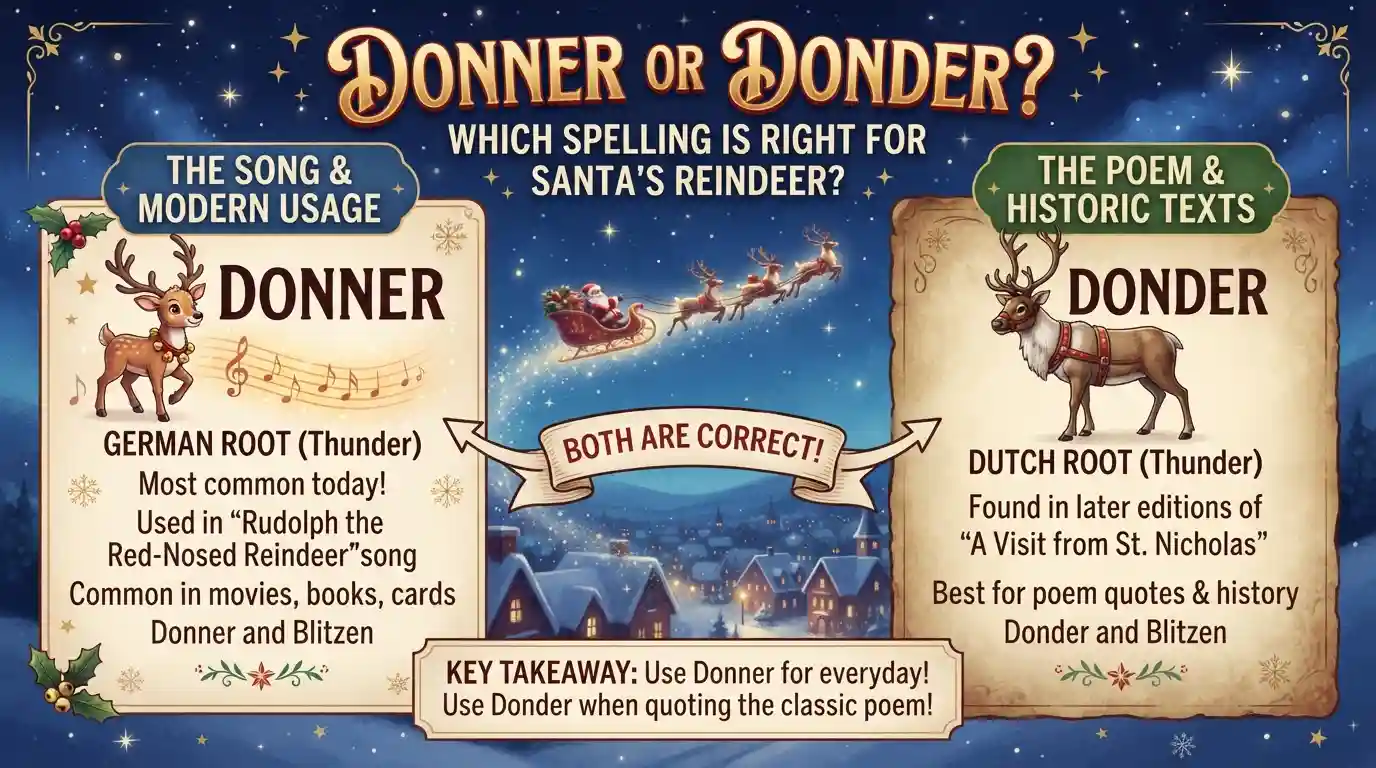
Both are correct. Donner is the more common spelling today.
- Donner is used in the song “Rudolph the Red-Nosed Reindeer” and in most movies, books, and shows.
- Donder comes from the classic poem “A Visit from St. Nicholas” (also called “The Night Before Christmas”). Some editions of the poem use it.
Examples:
- “Dasher, Dancer, Prancer, Vixen, Comet, Cupid, Donner, and Blitzen.” (song style)
- “On, Comet! on, Cupid! on, Donder and Blitzen!” (poem style)
Simple rule: If you want the spelling most people know, use Donner.
The Origin of Donner and Donder
The story starts with a poem. It was first printed in 1823. It listed the reindeer as “Dunder and Blixem.” These are Dutch words. They mean “thunder and lightning.”
Later, the poem was changed. Newer editions used “Donder and Blitzen.” Donder is the Dutch word for thunder. Blitzen comes from the German word Blitz, which means lightning.
Then came the song. In 1949, a song about Rudolph named the reindeer. It used “Donner and Blitzen.” Donner is the German word for thunder. The song became hugely popular, and so did its spelling.
So why do two spellings exist? Because the name came from two languages:
- Dutch: donder (thunder)
- German: Donner (thunder)
Both mean the same thing. Over time, writers picked the one they liked. Songs, movies, and toys spread “Donner” far and wide. The poem kept “Donder” alive.
Is Donner vs Donder a British English vs American English Spelling?
No. This is a common guess, but it is not true. British and American spelling rules explain words like color and colour. They do not explain this name.
The difference here is about the source, not the country. One spelling follows the poem. The other follows the song.
| Feature | Donner | Donder |
| Language root | German | Dutch |
| Meaning | Thunder | Thunder |
| Made famous by | Rudolph song (1949) | Poem (19th-century editions) |
| Used in US? | Yes, most often | Yes, in poem texts |
| Used in UK? | Yes, most often | Yes, in poem texts |
| Pairs with | Blitzen | Blitzen |
| Best for | Everyday use | Poem quotes, history |
Key point: Both spellings are used in the US, the UK, and other countries. Where you live does not decide which one is right.
Which Spelling Should You Use?
Think about your reader. Then pick.
For a US audience: Use Donner. It matches the song and most holiday media.
For a UK or Commonwealth audience: Use Donner too. It is the common choice in cards, films, and children’s books there.
For a global audience: Use Donner. It is the safest and most familiar.
Use Donder when:
- You are quoting the poem “A Visit from St. Nicholas.”
- You are writing about Christmas history.
- You want a classic, old-fashioned feel.
Pro tip: Stay consistent. Do not use Donner in one place and Donder in the next.
Common Mistakes with Donner and Donder
1. Thinking one is wrong.
Neither is a typo. Both have real roots.
2. Mixing the spellings.
Wrong: “Donner and Donder pulled the sleigh.”
Fix: Pick one name. Remember, Donner and Donder are the same reindeer, not two.
3. Spelling it “Doner” or “Donnar.”
Wrong: “Doner and Blitzen.”
Fix: Use Donner (two n’s) or Donder. A doner is a kebab.
4. Forgetting the capital letter.
Wrong: “donner and blitzen”
Fix: These are names. Write “Donner and Blitzen.”
5. Mixing the poem and the song.
Wrong: Quoting the poem but using “Donner.”
Fix: If you quote the poem, use the poem’s spelling.
6. Confusing him with the Donner Party.
That is a different Donner. It is a family name tied to a historical event, not the reindeer.
Donner or Donder in Everyday Examples
In an email:
“Hi team, our holiday party theme is Santa’s reindeer. Prizes go to the best Donner costume!”
In news writing:
“Children lined up to meet Santa’s reindeer, including Rudolph, Donner, and Blitzen.”
On social media:
“Just learned there are two spellings: Donner and Donder. Mind blown! 🦌 #Christmas”
In formal writing (a history essay):
“The 1823 poem named two reindeer ‘Dunder and Blixem.’ Later editions changed this to ‘Donder and Blitzen.'”
On a greeting card:
“Wishing you a season as bright as Rudolph’s nose, and as fast as Donner and Blitzen!”
Donner or Donder Google Trends & Usage Data
I did not pull live Google Trends numbers for this article, so I will not invent figures. Here is what is generally true, and how you can check it yourself.
Seasonal pattern: Searches rise sharply in late November and peak in December. They fall fast after Christmas.
Which one is bigger: “Donner” usually draws more interest than “Donder.” It is the version tied to the song and to movies. Part of the search volume for “Donner” also comes from the surname and the Donner Pass, so context matters.
Who searches “donner or donder”: Mostly parents, teachers, writers, and trivia fans. They want a fast answer before a card, a party, or a lesson.
By country: Interest tends to appear in English-speaking countries such as the US, UK, Canada, and Australia, all in the holiday season.
To see current data: Open Google Trends, type “Donner” and “Donder,” set the region, and choose “Past 5 years.” You will see the yearly spike clearly.
Keyword Variations Side by Side
| Variation | Status | Where you see it | Use it? |
| Donner | Correct, most common | Song, films, books | Yes, by default |
| Donder | Correct, less common | Poem editions | Yes, for poem quotes |
| Dunder | Correct, historic | 1823 poem | Only in history |
| Doner | Different word (kebab) | Food menus | No |
| Donnar | Misspelling | Typos | No |
| Donner and Blitzen | Standard pair | Song, cards | Yes |
| Donder and Blitzen | Poem pair | Poem editions | Yes, for quotes |
FAQs
1. Is it Donner or Donder?
Both are correct. Donner is more common today. Donder appears in some versions of the classic poem.
2. What does Donner mean?
It is the German word for thunder. Donder is the Dutch word for thunder.
3. Is Donder the British spelling?
No. Both spellings are used in the UK and the US. The difference comes from the song and the poem, not from the country.
4. Which spelling is in “Rudolph the Red-Nosed Reindeer”?
The song uses Donner.
5. Which spelling is in “The Night Before Christmas”?
It depends on the edition. The first printing used “Dunder.” Later versions use “Donder.”
6. Are Donner and Donder two different reindeer?
No. They are two spellings of one name.
7. Is it Blitzen or Blixem?
Blitzen is the common form today. Blixem was in the earliest poem and is the Dutch word for lightning.
8. Can I use either one in a school paper?
Yes. Just stay consistent, and match the source if you are quoting.
Conclusion
So, is it Donner or Donder? Now you know. Both are correct. Each has its own history, and neither is tied to British or American spelling.
Donner comes from German and was made famous by the 1949 Rudolph song. It is the spelling most people know. Donder comes from Dutch and is found in later editions of the classic poem. It is the better choice when you quote that poem or write about Christmas history.
Here is the simple advice:
- Use Donner for cards, emails, social posts, and party plans.
- Use Donder when you quote the poem.
- Always pair the name with Blitzen.
- Pick one spelling and stay consistent.
- Watch out for typos like “Doner” and “Donnar.”
Remember, this is just a small spelling choice. No one will be upset if you pick either one. What matters is that you know the reason behind it, and now you do. Next time someone asks, you can answer with confidence and share a fun fact about thunder, too.

Sikandar Hayat is the author and creator of Journalneste.com, a website dedicated to heartfelt wishes, messages, greetings, and inspiring words for every special moment. With a passion for meaningful writing, Sikandar creates warm and thoughtful content that helps readers express their feelings with ease. His goal is to provide beautiful, shareable words for birthdays, celebrations, relationships, and memorable occasions.