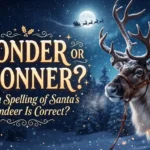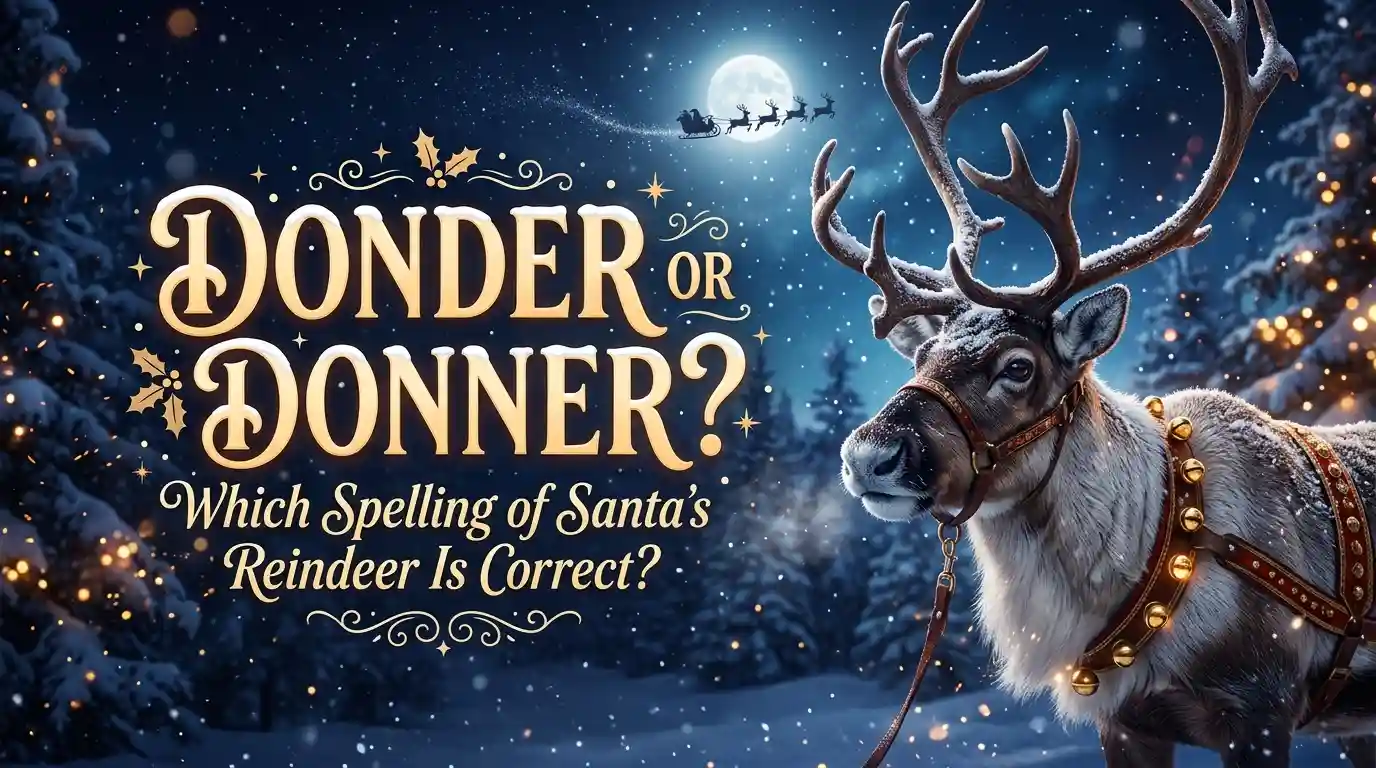
Every December, the same question pops up. Is it Donder or Donner? You hear the name in a song. You see it on a card. Then you try to type it, and you freeze.
You are not alone. Many people search for this each year. Kids ask it in school. Parents ask for it while wrapping gifts. Writers ask it before they send a holiday email.
The confusion is easy to understand. Some spellings are real. Both appear in famous books and songs. Both have been used for almost 200 years. Most people know only one of them, so the other looks like a typo.
This guide clears it up. You get the quick answer first. Then you learn where the name came from and how the two spellings compare. You also learn which one to use in your own writing. You will see common mistakes, real examples, and answers to common questions.
By the end, you will know which spelling to pick, and why.
Donder or Donner Quick Answer
Both are correct. They are two spellings of the same reindeer name.
- Donner is the most common spelling today, especially in the US. It comes from the German word for “thunder.”
- Donder is the older spelling. It comes from the Dutch word for “thunder.”
Examples:
- “Dasher, Dancer, Prancer, Vixen, Comet, Cupid, Donner, and Blitzen.” (US style)
- “Donder and Blitzen pulled the sleigh.” (Older style)
Short advice: If you are unsure, use Donner. Most readers know it best.
The Origin of Donder and Donner
The name started with a poem. “A Visit from St. Nicholas” was first printed in 1823. Today it is often called “The Night Before Christmas.”
In that first printing, the reindeer were named Dunder and Blixem. Those words come from Dutch. Dutch settlers had brought many Christmas customs to New York. Most historians link the names to their Dutch roots.
Here is what the words mean:
- Donder (Dutch) = thunder
- Blixem (Dutch) = lightning
- Donner (German) = thunder
- Blitz (German) = lightning
Later, the poem was changed. By 1844, the author’s own collection used Donder and Blitzen. Over time, the German spellings, Donner and Blitzen, became more popular. A big boost came in 1949 with the song “Rudolph the Red-Nosed Reindeer.” It used Donner. Millions of people heard it each year, and that spelling stuck.
So why are there two spellings? English borrowed the name from two close languages. Dutch and German words for “thunder” look alike. Writers picked the one they knew. Neither was ever “wrong.”
British English vs American English Spelling
Here is a surprise. This is not a true UK vs US spelling split. It is not like color and colour. Both countries have used both spellings.
Still, usage has patterns. Many US readers know Donner from the Rudolph song. Some older books and some UK or Commonwealth editions keep Donder.
| Feature | Donner | Donder |
| Language root | German | Dutch |
| Meaning | Thunder | Thunder |
| Partner name | Blitzen | Blitzen (or Blixem in the oldest text) |
| Common in US | Very common | Less common |
| Common in UK | Common | Seen in older or classic editions |
| Linked to | Rudolph song (1949) | Older poem editions |
| Safe pick? | Yes | Yes, but less known |
Key point: No official rule says one is British and one is American. It is a matter of which text you follow.
Which Spelling Should You Use?
Pick based on your reader.
US audience: Use Donner. It is what most people know.
UK or Commonwealth audience: Both work. Donner is still the safer choice. Use Donder if you quote an older edition of the poem.
Global audience: Use Donner. It is the most widely recognized form.
Quoting a book or poem: Copy the spelling in your source. Do not “fix” it.
Tip for any writer: Pick one spelling and stick with it. Do not switch halfway through a page.
Common Mistakes with Donder and Donner
1. Calling one spelling a typo.
Both are real. Do not “correct” someone’s Donder to Donner without checking the source.
2. Mixing the two in one text.
Wrong: “Donder and Blitzen, then Donner.” Choose one.
3. Writing “Donner” with the wrong partner name.
The usual pair is Donner and Blitzen. Some people write Donner and Blixen. That is a slip.
4. Spelling it “Dunner” or “Donnar.”
These are not accepted. Use Donner or Donder.
5. Mixing up the name with the surname.
Donner is also a family name and a place name in the US. In a holiday text, it means reindeer. Capitalize it either way.
6. Forgetting the capital letter.
Right: Donner. Wrong: donner. It is a name, so it starts with a capital.
Donder and Donner in Everyday Examples
Email (holiday greeting):
“Wishing you a warm holiday. May Santa, Donner, and the whole team bring you joy!”
News headline:
“Kids Write to Donner and Blitzen in Annual School Letter Drive”
Social media post:
“Which reindeer is your favorite? I’m Team Donner. ⚡🦌”
Formal writing (school report):
“In the 1823 poem, the reindeer were named Dunder and Blixem. Later editions changed the names to Donder and Blitzen, then Donner and Blitzen.”
Classroom note:
“Remember: Donder and Donner mean the same thing. Both mean thunder.”
Donder or Donner Google Trends & Usage Data
I can’t pull live numbers here, so check Google Trends for exact, current figures. Here is what usage patterns usually show.
- Seasonal spikes. Searches rise in November and peak in December. They fall sharply in January.
- Donner leads. The Donner spelling is usually searched and used more, especially in the US.
- Donder interest. People often search Donder when they see it in a book or hear it in a song and wonder if it is a mistake.
- Context matters. Searches for Donner alone may point to the surname or a place. Searches for “Donder or Donner” are almost always about reindeer.
- Where the question comes from. English-speaking countries such as the US, UK, Canada, and Australia are where most “which is right” searches come from.
Tip: Open Google Trends and compare “Donner reindeer” with “Donder reindeer.” Set the range to five years. You will see the holiday waves clearly.
Keyword Variations Side by Side
| Variation | Correct? | Notes |
| Donner | Yes | Most common today |
| Donder | Yes | Older, Dutch-based spelling |
| Dunder | Historic | Seen in the 1823 poem |
| Dunner | No | Common typo |
| Donnar | No | Common typo |
| Donner and Blitzen | Yes | Most popular pair |
| Donder and Blitzen | Yes | Older pair |
| Dunder and Blixem | Historic | The very first version |
FAQs
1. Is it Donder or Donner?
Both are correct. Donner is more common today. Donder is the older form.
2. Which spelling did the original poem use?
The first printing in 1823 used Dunder and Blixem. Later versions changed to Donder and Blitzen, then Donner and Blitzen.
3. What does Donner mean?
It is German for “thunder.” Donder is Dutch for “thunder.”
4. Is Donder a British spelling?
Not really. There is no strict UK or US rule. It depends on the edition or text you follow.
5. Which spelling does the Rudolph song use?
It uses Donner. That song helped make the spelling popular.
6. Who is Donner’s partner?
Blitzen. The pair stands for thunder and lightning.
7. Is it wrong to write Dunder?
It is not wrong if you quote the 1823 poem. In normal writing, use Donner or Donder.
8. Which should I use in a school paper?
Use Donner, unless your source uses Donder. Always match your quote.
Conclusion
So, Donder or Donner? Here is what to remember.
Both spellings are correct. They are two forms of one name. Donder comes from Dutch. Donner comes from Germany. Both mean “thunder.”
The reindeer first appeared in a poem in 1823. The first names were Dunder and Blixem. Over time, the spelling changed. The Rudolph song in 1949 made Donner the most common form.
There is no strict British or American rule. Both countries have used both spellings. Your choice should depend on your reader.
Here is the simple advice:
- Not sure? Use Donner.
- Quoting an older book? Copy its spelling.
- Writing for a global crowd? Use Donner.
- Always pick one spelling and stay with it.
- Always use a capital D.
Now you know the answer. You can write your holiday cards, emails, and posts with confidence. And if someone calls Donder a typo, you can tell them the story.

Sikandar Hayat is the author and creator of Journalneste.com, a website dedicated to heartfelt wishes, messages, greetings, and inspiring words for every special moment. With a passion for meaningful writing, Sikandar creates warm and thoughtful content that helps readers express their feelings with ease. His goal is to provide beautiful, shareable words for birthdays, celebrations, relationships, and memorable occasions.